Products in this article:


How to Choose the Right Mesh Size Based on Your Cooking Needs
Choosing the right mesh size for strainers and tea strainers can make a surprisingly big difference in everyday cooking and tea preparation. While many products may appear similar at first glance, the mesh size greatly affects:
- How quickly water drains
- The smoothness of the final texture
- How easily tea leaves escape through the mesh
- How efficiently powders can be sifted
- Ease of cleaning
In many cases, products that feel inconvenient to use were simply chosen with the wrong mesh size for the intended purpose. In this guide, we will explain the characteristics of different mesh sizes for strainers and tea strainers, how to choose the right type for specific uses, and how mesh size can affect food texture and overall results — all in a clear, beginner-friendly way.
What Is Mesh?

The term “mesh” refers to the size and density of the openings in a screen or strainer. Specifically, it indicates how many mesh openings are contained within one inch (approximately 25.4 mm).
In other words:
- A smaller mesh number means larger openings
- A larger mesh number means finer openings
This means that the higher the mesh number, the finer the texture and the greater the filtration capability.
Mesh Size Guide: Features and Best Uses
6.5 Mesh (Coarse)

A 6.5 mesh strainer features a very coarse mesh commonly used in professional kitchen settings. Designed to prioritize fast drainage, it has significantly larger openings than standard household strainers, making it especially suitable for preparing large quantities of food efficiently.
Its excellent draining performance allows for quick and smooth kitchen work, making it ideal for draining noodles, vegetables, and other ingredients that require efficient water removal.
Features
- Very large mesh openings designed to prioritize fast drainage over fine filtering
- Commonly used in professional kitchens as a drainage-focused strainer
Benefits
- Excellent water drainage performance
- Resistant to clogging
- Easy to clean
- Often made with thicker wire for enhanced durability in commercial-use designs
- Highly breathable, allowing heat to escape easily
- Well suited for large-scale cooking and food preparation
Best Uses
- Draining noodles such as pasta, udon, soba, and ramen
- Draining vegetables including lettuce, cabbage, bean sprouts, edamame, and broccoli
- Washing ingredients
- General food preparation tasks such as cooling boiled vegetables, parboiled ingredients, or thawed foods
- Draining excess oil from fried foods
11 Mesh (Medium)

An 11 mesh strainer offers a well-balanced design that is neither too coarse nor too fine, making it especially practical for everyday household use.
While maintaining efficient drainage performance, the finer mesh also helps retain smaller ingredients more effectively. Its balanced combination of drainage and ingredient retention makes it suitable for a wide range of cooking tasks, from beginner-friendly meal preparation to daily kitchen use.
This versatile mesh size is particularly recommended for preparing and draining vegetables such as broccoli, cherry tomatoes, leafy greens, and potatoes, as well as for general cooking applications.
Features
- A versatile mesh size that is neither too coarse nor too fine
- One of the most practical and user-friendly options for everyday home cooking
Benefits
- Excellent drainage performance
- Less prone to clogging
- Many models feature sturdy mesh wire construction that resists bending and deformation, contributing to long-lasting durability
- Ideal for general-purpose use
Best Uses
- Everyday cooking and general food preparation
- Draining vegetables and tofu
- Draining noodles such as pasta, udon, ramen, and soba
- Preparing ingredients such as cleaning clams, washing mushrooms, and rinsing chilled noodles
14 Mesh (Fine)

A 14 mesh strainer offers an excellent balance between coarse and fine mesh sizes. Slightly finer than standard draining strainers, it is especially well-suited for tasks that require straining, filtering, or handling smaller ingredients with greater precision.
This mesh size is highly practical for household use and provides more versatility than coarse mesh types such as 6.5 or 11 mesh. In addition to general draining, it is recommended for filtering ingredients, assisting with food straining, and removing residue from stocks and dashi.
Features
- A versatile mesh type that bridges the gap between coarse strainers and fine tea strainers
- Provides an excellent balance between smooth drainage and resistance to clogging
- Well suited for handling smaller or delicate ingredients securely
Benefits
- Small ingredients are less likely to slip through the mesh
- Convenient for preparing dashi, broths, and soups
- Well balanced for easy cleaning, with reduced clogging and quick drying
- Excellent drainage performance helps speed up cooking and food preparation
Best Uses
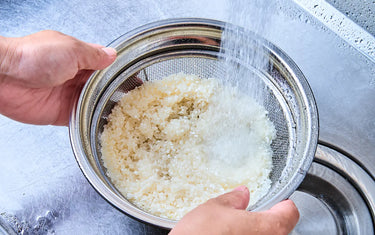
- Washing and rinsing rice
- Draining smaller ingredients
- Draining thin noodles such as somen, harusame, hiyamugi, and rice vermicelli
- Ingredient preparation and storage, including cut vegetables
- Filtering used cooking oil to remove food particles and impurities
- Supporting baking tasks such as sifting cocoa powder, coarse flour, or ground nuts
- Straining dashi made from bonito flakes, dried sardines, or vegetable broth while preserving a natural texture and flavor
30 Mesh (Tea Strainer / Slightly Coarse)

Recommended for those who want tea leaves to fully unfurl during brewing. This mesh size offers a well-balanced combination of smooth water flow and effective filtration.
Features
- Slightly coarse mesh
- Allows tea leaves to fully unfurl
- Provides excellent water flow
Benefits
- Tea leaves can expand more easily, resulting in faster extraction
- Less prone to clogging, making it easy to clean and suitable for everyday use
- Pairs well with relatively large tea leaves and helps bring out their aroma
Best Uses
- Brewing Japanese teas such as sencha, gyokuro, and kukicha
- Loose-leaf black tea
- Herbal tea
- Everyday use
- For those who prefer full tea leaf expansion during brewing
40 Mesh (Tea Strainer / Standard)

Designed for versatility, the 40-mesh strainer is a fine standard mesh that has become a favorite among Japanese tea enthusiasts. It delivers refined filtration performance, making it particularly suitable for everyday tea preparation.
The finer mesh may require a bit more attention during cleaning, as small tea particles can become trapped and dried leaves may adhere to the screen.
Interestingly, tea strainers are also valuable tools in pastry and confectionery work. A 40-mesh screen is ideal for evenly applying powdered sugar or cocoa powder as a finishing touch to desserts.
Features
- Standard fine mesh
- Well-balanced filtration performance
- Easy-to-use design
Benefits
- Helps reduce unwanted particles and bitterness, resulting in a smoother mouthfeel
- Prevents tea leaves from passing through the mesh
- Suitable for finer tea leaves and particularly effective for deep-steamed Japanese green tea (fukamushi sencha)
Best Uses
- Japanese teas such as fukamushi sencha (deep-steamed green tea), konacha, and kabusecha
- Chinese teas such as oolong tea and white tea
- Teas with finer leaves or particles
- Brewing with an emphasis on clarity and smoothness
- Finishing cakes, pastries, and French toast with powdered sugar or cocoa powder
200 Mesh (Tea Strainer / Extra Fine)

Ideal for those who appreciate delicate and nuanced flavors. However, this mesh is often finer than necessary for most tea leaves. Because water passes through more slowly, the mesh is more prone to clogging and may occasionally require cleaning with a brush.
Features
- An exceptionally fine mesh that belongs in a category of its own compared to standard tea strainers
- Designed primarily for filtering ultra-fine particles, making it a highly specialized option for home use
- Produces a remarkably smooth and clear finish
- Effectively prevents tea dust and fine particles from passing through
Benefits
- Offers an exceptionally silky mouthfeel
- Creates a refined and elegant texture
Best Uses
- Matcha and other finely powdered teas
- Specialized filtration applications, such as removing fine coffee particles or creating exceptionally clear dashi and soups
- Situations where the highest-quality finish is the priority
- Filtering ultra-fine particles
Which Mesh Combination Is Best for Everyday Home Use?
Strainers and tea strainers are essential tools for everyday food preparation, cooking, and brewing delicious tea. Each type has its own unique characteristics, from mesh size to manufacturing method, making them suitable for different purposes.
As a general guide, choose a 6.5–11 mesh strainer when drainage is the priority, an 11–14 mesh strainer for all-purpose use, a 30–40 mesh strainer for tea brewing and baking, and a 200 mesh strainer for filtering ultra-fine particles.
For most households, simply having one coarse-mesh strainer and one fine-mesh strainer can make a noticeable difference in both cooking and tea preparation.We hope this guide helps you find the strainer or tea strainer that best suits your needs and enhances your daily kitchen experience.
We hope this guide helps you find the strainer or tea strainer that best suits your needs and enhances your daily kitchen experience.