Products in this article:


What is a Yukihira Saucepan?
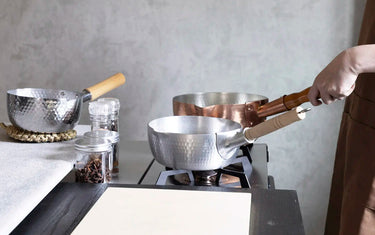
Yukihira saucepans are single-handled pots designed for ease and versatility. Their lightweight build make them a favorite for daily tasks in Japanese kitchens like making miso soup and nimono. The tsuchime texture—those hand-hammered dimples—adds both aesthetic appeal and a practical benefit, helping to distribute heat evenly.
Comparing Yukihira Saucepans by Material
Yukihira saucepans are built with several different materials with their own pros and cons: aluminum, stainless steel, and copper. A typical Japanese household may have multiple pans made with different materials due to their special qualities.
Aluminum Yukihira Saucepans


- Features: Aluminum is a lightweight champion with excellent heat conductivity, meaning it heats up quickly.
- Pros: Its featherlight weight makes it easy to handle, especially when juggling multiple tasks in the kitchen. Plus, aluminum Yukihira saucepans are often budget-friendly, offering great value for busy households.
- Cons: Aluminum is sensitive to acidic or salty ingredients, which can cause discoloration over time. Also, many aluminum models aren’t compatible with induction (IH) stovetops, so check compatibility if you have an induction range.
My mother-in-law uses aluminum pans exclusively and makes excellent food, even though aluminum is the cheaper material, it doesn’t necessarily mean lower quality food.
Stainless Steel Yukihira Saucepans


- Features: Stainless steel is durable and resistant to rust, making it ideal for slow, steady cooking with medium to low heat.
- Pros: These saucepans have a sleek, clean look and are built to last, even with frequent use. They’re also resistant to acidic ingredients like tomatoes, so you can cook worry-free.
- Cons: Heat conductivity is slightly lower than aluminum or copper, so you’ll need to watch for potential sticking or scorching, especially with thicker sauces.
Copper Yukihira Saucepans


- Features: Copper is the premium choice, often favored by professional chefs for its superior heat conductivity and precise temperature control.
- Pros: Copper saucepans respond instantly to heat adjustments, making them ideal for delicate tasks like tempering eggs for chawanmushi or reducing sauces. They also let off an extremely handsome warm glow.
- Cons: These are heavier and pricier than other options, and they require extra care to prevent verdigris (a green patina).
Stove Type Makes a Big Difference
Yukihira saucepans, unlike your typical frying pans, have relatively thin bottoms. While I don’t have experience with yukihira pans, I have used other pots and pans with similarly thin bottoms.
With IH, my experience has always been rather negative. IH doesn’t allow as much “nuance” or control of the heat: my stove has 10 power levels, and the pot or pan needs to be sitting on the stove for it to heat at all, and IH heats the pan up quickly…around the middle. At level 5, chicken cooks evenly, but at 6 it burns. Pancakes cooked on thin stainless steel pans seem to burn nearly every time. The kind of foods I cook don’t cook well with thin pots and pans on IH.
My mother-in-law seems to use IH with yukihira pans without trouble. Food like miso soup and nimono–both water-based foods–are perhaps less sensitive to the “directness” of the heat that IH provides. This is my experience with cooking pasta: the water boils quickly, and pasta just need to be stirred occasionally to prevent sticking. Chicken soups are no problem because the heat doesn’t need to be exact and it is a water-based food.
On the other hand, with gas stoves, you have significantly more control over temperature. If you take the heat away from a thin aluminum pot or pan, your food stops cooking almost immediately. You can dial in the appropriate heat depending on the food.
Keep your stove type and desired foods in mind when you buy a yukihira saucepan. If you plan on making Japanese foods that are water-based, then you’ll probably be okay either with IH or gas. If you try cooking western foods on an IH stove, you may run into unexpected trouble.
Care Tips for Your Yukihira Saucepan

Proper care keeps your Yukihira saucepan in top shape. Here’s a quick guide for each material:
- Aluminum: Wash gently with a mild dish soap to preserve its finish. Avoid harsh scrubbers to prevent scratches.
- Stainless Steel: Wipe dry after washing to prevent water spots and maintain its shine.
- Copper: Polish regularly with a dedicated copper cleaner to keep it gleaming and free of verdigris.
Find Your Perfect Yukihira Saucepan
The beauty of the Yukihira saucepan lies in its versatility, and choosing the right material depends on your cooking style and needs. If you prioritize affordability and ease, aluminum is a great pick. For durability and low maintenance, stainless steel is your go-to. And if you’re ready to elevate your cooking with professional precision, copper is unbeatable.
And if you do buy a yukihira saucepan, consider purchasing a drop lid to help cook your nimono to perfection, and maybe throw in an extra sarashi if you go with copper.