Products in this article:

What is Juugoya? Its Meaning and Origins

Juugoya, or the “Fifteenth Night,” is Japan’s traditional moon-viewing festival, celebrated under the luminous glow of the harvest moon, also known as Chushu no Meigetsu (Mid-Autumn Moon). This event, steeped in history, originates from ancient Chinese influences during the Tang Dynasty, which blended with Japan’s indigenous appreciation for nature. The festival occurs on the fifteenth day of the eighth lunar month in the old lunar calendar, a time when the moon is at its fullest and brightest. In the modern Gregorian calendar, this typically falls between September and October, creating a slight shift in dates each year due to the lunar cycle.
The custom of moon-viewing, or tsukimi, is deeply rooted in Japanese culture, reflecting a reverence for nature’s rhythms. Historically, aristocrats in the Heian period (794–1185) would gather to compose poetry and admire the moon, seeing it as a symbol of transience and beauty. This practice spread across society, becoming a cherished autumn tradition that celebrates the harvest and the moon’s serene presence.
Essential Offerings for Juugoya and Their Meanings


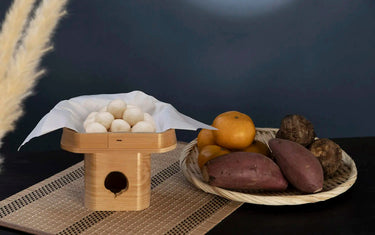
Juugoya is incomplete without its traditional offerings, each carrying symbolic weight. The most iconic is tsukimi dango, round rice dumplings that mimic the full moon’s shape, symbolizing abundance and gratitude for the harvest. Typically, 15 dango are offered, arranged in a pyramid on a small stand to honor the fifteenth night. These are often placed on a veranda or near a window facing the moon.
Susuki (pampas grass) is another staple, its feathery plumes resembling rice stalks, symbolizing a bountiful harvest. Unlike rice, susuki is durable and believed to ward off evil spirits, making it a protective offering. Seasonal produce like taro (satoimo), sweet potatoes (satsumaimo), mandarin oranges (mikan), and chestnuts (kuri) are also offered, representing the earth’s gifts and giving thanks for agricultural prosperity. The exact offerings are region-specific–the ones pictured in this article reflect the local traditions here in Saga, Japan.
These offerings are arranged on a sanbo (see below) or bamboo colander, placed in a spot with a clear view of the moon, such as a porch or garden. The setup is simple yet intentional, reflecting harmony with nature and the cosmos.
The Role of the Sanbo

The sanbo is a wooden tray used in Shinto rituals and during Juugoya to present offerings, symbolizing purity and reverence. Sanbo means “three treasures” and is typically a three-tiered tray. The sanbo pictured is a single-tiered version. This simpler form is still functional, elevating items like tsukimi dango and susuki grass for a clear moonward display. Variations in the sanbo design exist across regions and households, with some opting for single-tiered or multi-tiered styles based on practicality or aesthetic preference, reflecting the adaptability of this cultural practice. Some traditions, for example, will simply stack three trays to form the desired three-tiered form.
The “Moon Rabbit” in Japanese Culture


In Japanese folklore, the moon is home to a rabbit (tsuki no usagi), a belief rooted in East Asian mythology. Unlike Western tales of a “man in the moon,” Japanese tradition sees the shadows on the lunar surface as a rabbit pounding mochi (rice cakes) with a mortar and pestle. This imagery stems from a Buddhist tale where a rabbit selflessly offered itself to feed a deity, earning a place on the moon as a symbol of sacrifice and kindness.
The moon rabbit has become a beloved motif in Japanese culture, appearing in art, stories, and even modern media. During Juugoya, it adds a whimsical charm, reminding people of the moon’s storytelling power and its role as a canvas for imagination.
More Japanese Holidays
If you’re interested in learning more about Japanese holidays, then check out our articles on Obon, Japanese New Year’s kagamimochi, the New Year’s meal called Osechi, the springtime festival Setsubun, the summertime festival called Tanabata, and two festivals dedicated to children–Hinamatsuri and Children’s Day.