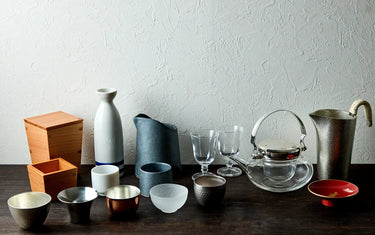
Products in this article:


Introduction
There is a wide variety of drinkware traditionally used to enjoy sake, including ochoko (small sake cups), sakazuki (shallow sake cups), guinomi (larger sake cups), masu (wooden box-shaped cups), and glasses designed specifically for chilled sake.
Even among sake cups of the same shape, the drinking experience can vary considerably depending on the material. Glass, ceramic, tin, wood, and metal each offer a distinctive feel on the lips and can influence how the sake’s aromas are perceived.
In this guide, we explore the different types of sake cups, the characteristics of various materials, and the key points to consider when choosing the right sake cup for your preferred style of sake.
Types of Sake Cups and Drinkware
First, let’s take a look at some of the most common types of drinkware used for enjoying sake and the distinctive characteristics of each.
Ochoko

Ochoko are among the most common cups used for drinking sake. In restaurants, they typically range in size from around 2 go (36 ml) to 4 go (72 ml).
Although the Janome 3-go Ochoko is named after the “3-go” size standard, this particular item has an actual capacity of approximately 70 ml.
Thanks to their small capacity, ochoko allow you to finish your sake before its temperature and flavor begin to change significantly. This makes them a versatile choice for both chilled and warm sake.
Sakazuki

Sakazuki are traditional sake cups characterized by their shallow, flat shape. They are often used on celebratory and ceremonial occasions, including san-san-kudo, a traditional sake-sharing ritual performed at Japanese weddings, as well as Shinto ceremonies.
Their wide, open shape allows the sake’s aroma to unfold more fully while enhancing its rich umami flavors.
Guinomi

Guinomi are deeper and slightly larger than ochoko. While there is no strict definition of their size, they generally range in capacity from around 40 ml to 200 ml.
The guinomi featured in this article have capacities ranging from approximately 65 ml to 120 ml.
Their larger size allows you to savor sake at a leisurely pace, making them an excellent choice for those who enjoy experiencing how its flavors and aromas evolve as the temperature changes.
Masu

Masu are traditionally considered auspicious because the word “masu” sounds the same as Japanese words meaning “to increase” or “to prosper.” For this reason, they are often used to serve sake at celebrations, parties, and other festive occasions.
A standard masu typically holds one go (180 ml). In addition to traditional wooden masu crafted from Japanese cedar or hinoki cypress, lacquered wooden varieties are also available.
The cedar masu featured in this article is slightly smaller than the standard size, holding approximately 90 ml when filled to about 80% capacity and 140 ml when filled to the brim.
Chilled Sake Glasses

Chilled sake glasses typically feature a wide, gently curved shape similar to a wine glass and are often used for sake tastings at competitions and other professional events.
The shape allows the sake’s aromas to open up and develop within the glass, making this style particularly well‐suited to aromatic sake with elegant, floral notes, as well as sparkling sake.
Other Useful Sake Ware
Beyond cups and glasses for drinking sake, there are also various types of vessels designed for pouring and serving sake, each with its own unique features.
Tokkuri

Tokkuri are traditional sake serving vessels typically characterized by a narrow opening and neck with a rounded body. They are made from a variety of materials, including ceramic, metal, and glass, and generally hold between 1 go (180 ml) and 2 go (360 ml).
Although the tokkuri featured in this article is called a “2-go Tokkuri,” its actual capacity is slightly less than 2 go, at approximately 280 ml.
With a versatile design suitable for both warm and chilled sake, tokkuri are widely used in Japan for pouring and serving sake.
Katakuchi

Katakuchi are traditional sake serving vessels with a long history in Japan, distinguished by a spout on one side of the rim. Because of their open design, sake tends to change temperature more quickly, so they are generally less suitable for warm sake.
Their practical shape makes them easy to pour from and clean, while their simple, refined appearance adds to their appeal.
Chirori

Chirori are sake warming vessels characterized by their tall, cup-like shape, handle, and pouring spout.
They are typically made from highly conductive metals such as aluminum, tin, or copper, which allow the sake to heat up quickly. Tin chirori are particularly popular at restaurants that take special care in preparing and serving sake.
Chilled Sake Servers

Chilled sake servers are vessels designed for serving cold sake. Many have a double-wall construction with space for ice or a cooling pack, allowing the sake to stay cool longer.
Glass and stainless steel are common materials, offering a crisp, refreshing look that is ideal for summer meals and serving guests.
When using a glass sake server, care should be taken to avoid chipping the spout. As glass is also more susceptible to breakage than many other types of sake ware, gentle handling is recommended.
Choosing Sake Drinkware by Material

The material of a sake cup can affect both its feel on the lips and the way the sake’s aroma is experienced. Let’s explore the distinctive qualities of each material.
Glass
With its cool, refreshing appearance, glass is an excellent material for enjoying chilled sake. Sake ware crafted using traditional Japanese techniques, such as Edo Kiriko and Tsugaru Vidro, is also prized for its distinctive and beautiful designs.
Glass has relatively little influence on the sake’s flavor, making it easier to appreciate its original character. For this reason, glass sake ware is also becoming increasingly common for sake tasting.
Ceramic
Ceramic sake ware tends to have thicker walls, which can create a softer, more rounded sensation on the lips. It is often considered a particularly good match for sake with rich flavors or pronounced sweetness.
Because ceramic conducts heat relatively slowly, it is also well suited to hot sake. Its wide variety of patterns, textures, and finishes—often unique to particular pottery regions and kilns—is another part of its enduring appeal.
Tin
Tin is believed to have antibacterial properties due to the action of its ions and is also said to give sake a smoother, more mellow mouthfeel.
Its excellent thermal conductivity helps cold sake stay cold and warm sake stay warm, making tin a versatile material suitable for both chilled and hot sake.
Wood
Wood is used not only for masu but also for ochoko-style sake cups. Its subtle natural aroma complements the umami and fragrance of sake, adding another dimension to the drinking experience.
Wooden sake ware has a simple, warm appearance and a pleasant feel on the lips, making sake easy to enjoy. After use, it is important to wash and dry it thoroughly to help prevent mold growth.
Lacquerware
Lacquerware sake cups are made by applying multiple layers of lacquer over a base of wood or resin. Their distinctive luster develops greater depth with continued use, and they are often used for celebrations and other special occasions.
In addition to offering a smooth feel on the lips and an elegant appearance, lacquerware is lightweight and easy to handle. It also retains heat well, helping sake stay warm for longer.
Traditional wooden bases offer a substantial feel and classic character, while resin bases are lighter and easier to handle, making them a practical choice for everyday use.
Copper
Copper has excellent thermal conductivity and is commonly used for chirori and other vessels designed for warming sake. It allows sake to heat quickly and evenly.
Another distinctive appeal of copper sake ware is the way its color and character gradually develop with use, creating a unique patina over time.
Stainless Steel
Stainless steel is highly resistant to rust and offers excellent durability. When used in double-wall tumblers and similar drinkware, it provides effective insulation to help keep sake warm or chilled for longer.
Durable, easy to maintain, and well suited to everyday use, stainless steel is also a practical choice for enjoying sake in more casual settings.
Titanium
Titanium is lightweight yet exceptionally hard and strong. It is highly resistant to corrosion and is also considered less likely to cause metal allergies.
It can also be used in vacuum-insulated, double-wall designs, providing excellent heat and cold retention. This makes titanium particularly well‐suited to those who enjoy the crisp, refreshing character of chilled sake.
Plastic
Plastic sake ware is lightweight, easy to carry, and highly resistant to breakage. It is available in a wide variety of materials, including Tritan and AS resin.
While plastic generally offers less heat and cold retention than metal or glass, it is affordable and practical, making it a convenient choice for outdoor use as well as everyday occasions.
Conclusion
With sake cups such as sakazuki and guinomi, the combination of shape, material, and thickness can significantly influence the mouthfeel and aroma of the same sake.
- For enjoying aroma: wide-mouthed glasses or sakazuki
- For a smooth, mellow mouthfeel: ceramic or wood
- For enjoying the crisp character of chilled sake: glass, tin, or titanium
- For convenience and everyday use: stainless steel or plastic
- For special occasions or gifts: lacquerware
Try choosing sake ware that complements your favorite bottle, and discover new ways to appreciate the flavors and aromas of sake.