Products in this article:


How to Choose and Care for a Wok: Find the Right Wok for Your Cooking Style

The wok is a versatile piece of cookware that can be used for a wide range of dishes—from stir-fries to deep-frying and simmering. In Japan, woks are generally available in two styles: the Beijing-style wok, with a long handle, and the Cantonese-style wok, with two side handles.
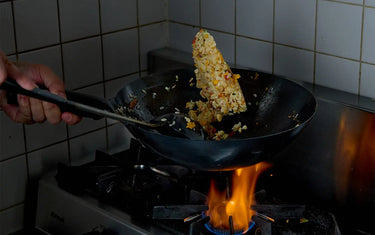
The Beijing-style wok is easy to hold thanks to its long handle, allowing you to toss and stir ingredients with one hand, much like using a frying pan. Its deep shape makes it especially well-suited for fried rice and stir-fried dishes, and it remains easy to use even when cooking smaller portions. These qualities make it an excellent choice for first-time wok users.
In this article, we introduce several recommended Beijing-style woks, categorized by material.
Excellent Heat Conduction: Iron Wok

A classic choice among professional cooks, iron woks excel at high-heat cooking, helping ingredients develop deep, savory flavors. They are highly durable and can provide long-lasting performance when properly maintained.
Features, Points to Note, and Suitable Dishes

Features
- Hand-Hammered Craftsmanship – Skilled artisans hammer the iron thousands of times, strengthening the metal while keeping it thin and lightweight—ideal for high-heat stir-frying.
- Excellent Heat Conductivity and Retention – Heats quickly and distributes heat evenly, while strong heat retention helps achieve flavorful, restaurant-quality results.
- Textured Surface for Better Oil Seasoning – The hammered surface helps oil spread evenly, and with continued use, the wok develops a naturally nonstick cooking surface.
- Pre-Dry-Heated for Easy First Use – The wok has already undergone a dry-heating process, allowing you to season it with oil and start cooking right away.
Points to Note
- Susceptible to Rust – Iron requires proper care to prevent rust.
- Wash Without Soap – Clean with a scrubber rather than detergent, dry thoroughly over heat, and apply a light coat of oil.
- Relatively Heavy – Lighter than many traditional iron woks, but still heavier than aluminum cookware.
- Initial Stickiness – The surface may cause sticking until the wok becomes well seasoned through use.
- Avoid Long Simmering and Acidic Dishes – Iron may react with acidic ingredients or extended simmering.
Suitable Dishes
- Stir-Fried Vegetables
- Fried Rice
- Stir-Fried Liver and Garlic Chives
- Yakisoba (Japanese Stir-Fried Noodles)
- Stir-Fried Leafy Greens
A Great Choice for Lightweight and Easy-to-Handle: Titanium Wok

Although not as widely used as iron woks, titanium woks are chosen for their lightweight design and ease of handling, making them easy to toss with one hand—even for many home cooks who prefer a lighter pan.
Features, Points to Note, and Suitable Dishes

Features
- Ultra-Lightweight – Surprisingly light compared to iron woks, reducing strain on the wrist even during extended cooking.
- Highly Responsive to Heat – Heats up very quickly, allowing ingredients to cook in a short time while preserving their natural flavors.
- Rust-Resistant and Durable – Titanium is highly resistant to rust and offers excellent strength.
- Resistant to Acidity – Suitable for dishes that use acidic ingredients such as vinegar.
Points to Note
- Moderate Heat Conductivity – Compared with iron, titanium requires a brief preheating period for heat to spread evenly across the wok.
- May Stick More Easily – Because oil does not adhere as readily as on iron surfaces, sticking can occur during early use or when cooking at low temperatures.
- Take Care When Preheating – Due to its 1.2 mm thickness, prolonged empty heating over high heat should be avoided to prevent warping.
Suitable Dishes
- Stir-Fried Vegetables
- Fried Rice
- Deep-Fried Dishes
- Simmered Dishes
- Soups
A Versatile Choice for Home Kitchens: Aluminum Wok

Aluminum woks are valued for their lightweight construction and excellent heat conductivity, making them easy to handle and quick to heat during cooking.
Features, Points to Note, and Suitable Dishes

Features
- Extremely Lightweight – Much lighter than iron and close to titanium in weight, making tossing and handling easier.
- Superior Heat Conductivity – Heat distributes quickly and evenly, allowing reliable cooking over medium heat and pairing well with household gas ranges.
- Designed for Gas Stoves – Intended for use with gas cooktops.
- Thick Aluminum Material – Uses aluminum roughly twice as thick as standard cookware (around 3.0 mm or more), helping prevent uneven heating and improve cooking consistency.
- Traditional Hammered Craftsmanship – Hand-hammering by skilled artisans strengthens the material by about 1.5–1.8 times, creating a lightweight yet highly durable wok.
Points to Note
- Recommended Initial Treatment – For the first use, simmer rice rinsing water or vegetable scraps in the wok for 10–15 minutes to help prevent discoloration and corrosion.
- Sticking Over High Heat – Very high heat may increase the likelihood of food sticking.
- Do Not Preheat Empty – Heating the wok without ingredients may lead to warping or damage.
- Sensitive to Acid and Alkali – Avoid leaving acidic or alkaline foods in the wok for long periods.
- Clean and Oil After Use – Wash with detergent, apply a light coat of oil, and dry thoroughly.
- Handle May Become Hot – The handle can heat up during cooking, so caution is recommended.
Suitable Dishes
- Stir-Fried Dishes
- Fried Rice
- Boiled Dishes
- Noodle Dishes
- Deep-Fried Dishes
Easy Maintenance and Versatile Performance Beyond Stir-Frying: Stainless Steel Wok

Stainless steel woks feature multi-layer steel construction, providing both durability and reliable heat conductivity. They are also compatible with induction cooktops (IH).
Features, Points to Note, and Suitable Dishes

Features
- IH and Gas Compatible – Designed for use on both induction and gas cooktops.
- Highly Durable and Low Maintenance – The thick construction reduces the risk of deformation, and unlike iron cookware, stainless steel does not rust. It can be cleaned easily with a cleanser and a metal scrubber.
- Round Bottom for Better Heat Circulation – The shape encourages convection within the wok, supporting fast, high-heat cooking with efficient heat transfer.
Points to Note
- Season with Oil Before First Use – Heat the wok over medium heat and coat the surface with about one ladle of oil to create a thin oil film that helps prevent sticking.
- Do Not Preheat Empty – Prolonged empty heating may damage the aluminum core or cause deformation and separation of the layered structure.
- Moderate Heat Recommended – Use medium to low heat to prevent burning or sticking.
- Control the Flame – Keep the flame from extending beyond the base of the wok.
- Cleaning Burnt Stains – Boil water with vinegar or citric acid, or use a baking soda paste to help remove burnt residue.
Suitable Dishes
- Stir-Fried Vegetables
- Fried Rice
- Deep-Fried Dishes
- Steamed Dishes
- Chinese-Style Braised Dishes
- Dishes with Thick Sauce (Ankake-Style)
Summary: Choosing the Best Wok Material for Your Needs

- Iron Woks – Ideal for those who prioritize high-heat cooking and stir-frying, or for anyone looking to enjoy authentic Chinese-style cooking.
- Titanium Woks – Best suited for those who want an exceptionally lightweight wok and are comfortable controlling heat levels, or for those who prefer a rust-resistant option.
- Aluminum Woks – Recommended for those who value lightness and ease of handling, making them well-suited for everyday home cooking.
- Stainless Steel Woks – A good choice for those who prioritize easy maintenance and durability, or for those who want a wok that can be used safely on induction (IH) cooktops.
Woks are often thought of as heavy cookware that requires complicated maintenance. However, depending on the material and manufacturing method, many woks are surprisingly lightweight and easy to care for.
A wok is a remarkably versatile cooking tool, suitable for everything from stir-frying and deep-frying to steaming and more. By choosing one that fits your cooking style and lifestyle, you can enjoy using it for a wide variety of dishes.