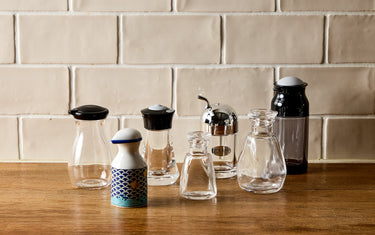
Products in this article:


Introduction
Condiment containers are a familiar and indispensable part of the dining table. Even for something as simple as pouring soy sauce, differences in materials, design, and functionality can greatly affect how comfortable and convenient a container is to use.
Perhaps you have encountered issues such as drips after pouring, difficulty controlling the amount dispensed, or containers that are troublesome to clean.
In this article, we explore how to choose the right condiment container according to the condiment you wish to store, the material, and the features that best suit your needs.
Choosing by Condiment Type
Not every condiment container is suitable for every type of condiment. Here, we outline key considerations when choosing a container for some of the most commonly used condiments.
Soy Sauce
Soy sauce dispensers are available in a particularly wide variety of designs and styles. Depending on your needs, you can choose from drip-resistant designs with carefully shaped pouring spouts, one-push dispensers, or models that let you control the amount dispensed by adjusting the applied pressure.
Chili Oil
Chili oil has a high oil content and is typically used in a few drops at a time. A dispenser that releases small amounts simply by tilting, or one with a narrow spout designed to minimize splashing, can make it easier to pour just the right amount.
Sauces (Such as Worcestershire Sauce)
For thicker condiments such as Worcestershire sauce, a spout that is too narrow may make pouring difficult. Choose a container with a moderately wide spout that is less likely to become clogged.
Karashi (Japanese Mustard)
Because karashi has a thick consistency, it is commonly served in a small pot with a spoon. A container with a relatively wide opening makes it easier to scoop out just the amount you need.
Choosing by Material

Each material used for condiment containers has its own distinct characteristics. Let’s take a closer look at three of the most common materials.
Glass
One of the main advantages of glass is its transparency, which makes it easy to see how much condiment remains at a glance. Glass is also less likely to retain odors and is easy to clean. Heat-resistant varieties can even be sanitized with boiling water, helping you keep the container clean and hygienic.
Glass also has a moderate weight, which provides a reassuring sense of stability when pouring.
Ceramic
With their substantial construction and the distinctive warmth of traditional Japanese tableware, ceramic condiment containers bring an inviting touch to the dining table. Their refined appearance complements beautifully presented dishes and makes them particularly suitable when entertaining guests.
Many feature traditional hand-painted or decorative designs created by artisans from renowned pottery regions in Japan. Their distinctive craftsmanship makes them equally appealing for everyday use or as a thoughtful gift.
Like glass, ceramic has a moderate weight that provides stability when pouring, while its attractive appearance adds an elegant accent to the table.
Plastic
Plastic condiment containers are lightweight, easy to handle, and less likely to break if accidentally dropped. They also tend to offer a wide range of practical features, including one-push mechanisms and designs that let you control the amount dispensed by adjusting the applied pressure.
With plastic containers, heat resistance may vary between individual components, such as the body, lid, and gasket. Parts with lower heat resistance may warp when exposed to the high temperatures of a dishwasher, so be sure to check each component's heat resistance before placing the container in a dishwasher.
Like glass, transparent plastic makes it easy to see how much condiment remains. At the same time, plastic is considerably lighter and more resistant to breakage than glass or ceramic, making it particularly easy to handle in everyday use.
Understanding the Difference Between Dedicated and Multi-Purpose Dispensers
Some plastic condiment dispensers are designed specifically for soy sauce, while others can accommodate a wider variety of condiments, including soy sauce, vinegar, and chili oil. Although these products may look similar, the condiments they can safely hold may differ depending on factors such as the materials and heat resistance of the gasket and push-button components. This is an important point to check before purchasing.
Multi-purpose dispensers tend to use gaskets with higher heat resistance. The acidity of vinegar and the oils and spicy compounds found in chili oil may cause rubber or silicone components in gaskets and buttons to deteriorate, swell, or discolor over time. For this reason, multi-purpose models may use materials with greater resistance to acids and oils.
By contrast, dispensers designed exclusively for soy sauce often have a simpler construction with somewhat lower heat resistance. Using them with other condiments—particularly acidic vinegar or oil-rich chili oil—may potentially cause the gasket to deteriorate or lead to dripping. Always check the packaging or product page to confirm which condiments the dispenser is designed to accommodate before use.
Choosing by Function
In addition to the material, the design and mechanism of the pouring spout can make a significant difference in ease of use.
Siphon-Type (S-Shaped or Curved Spout)

This type features an S-shaped or curved tube inside the dispenser, allowing you to pour simply by tilting the container, without the need to open a cap or press a button.
The design makes use of the siphon principle. When three conditions are met—the liquid is exposed to equal atmospheric pressure, the tube is filled with liquid, and there is a difference in liquid level—the liquid naturally flows from the higher level to the lower level through the tube.
By incorporating this principle into the spout design, any drop remaining at the tip after pouring is drawn back into the tube when the dispenser is returned upright, helping to prevent unwanted drips.
Many of these dispensers feature a gracefully curved or S-shaped spout that is visible from the outside. This combination of practical functionality and elegant design helps keep the table clean while adding a refined touch to the setting.
The design provides a clean cutoff when pouring soy sauce, reducing the likelihood of drops continuing to fall from the tip after use. However, depending on how far the dispenser is tilted, the soy sauce may flow out more quickly than expected.
One-Push Type (Dispenses a Fixed Amount)

This type dispenses approximately the same amount each time the button is pressed. By helping prevent over-pouring, it is particularly useful for those who wish to monitor their salt intake or use a consistent amount for each dish.
Many models dispense approximately 0.3–0.5 mL with each push, making them ideal for dishes that require only a small amount of seasoning at a time.
Even if the dispenser is accidentally tipped over, the liquid inside is unlikely to leak unless the button is pressed. This makes it a practical choice for households with young children.
The design also helps minimize dripping from the spout, making it easier to keep both the spout and the bottle clean.
Push-Control Type (Adjustable Dispensing)

This type allows you to control the amount dispensed by adjusting how firmly you press. Whether you want to add just a small amount or pour more generously, a single dispenser can accommodate different needs.
As the name suggests, the amount dispensed varies depending on the pressure applied, allowing you to adjust the quantity to suit different dishes and personal preferences.
Since the contents will not dispense simply by tilting the container, there is less risk of spills if it is accidentally knocked over, making it a practical choice for households with children.
Models with a relatively large capacity also reduce the need for frequent refilling.
This type is best suited for thin, free-flowing liquid condiments.
Conclusion
Depending on their material and design, some condiment containers are intended specifically for soy sauce, while others are suitable for a wider variety of condiments.
- If you want to minimize lingering odors, glass is an excellent choice and is easy to dedicate to a particular condiment.
- If you want to bring the warmth and character of Japanese tableware to your dining table, choose ceramic.
- If you value lightweight construction and practical functionality, consider a plastic one-push or push-control dispenser.
- If you prefer smooth, effortless pouring without opening a cap, a siphon-type dispenser is an excellent option.
Consider how you use condiments in your everyday meals and the atmosphere of your dining table to find the container that best suits your needs.