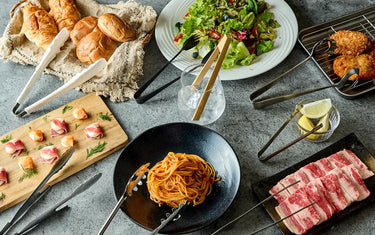
Products in this article:


Introduction
Kitchen tongs are one of the most versatile tools in the kitchen, making it easy to grip, turn, and serve a wide variety of foods. Whether you're cooking, plating, or serving, the right pair of tongs can make everyday tasks more efficient and enjoyable.
Today, kitchen tongs are used not only in home kitchens but also in restaurants, hotels, bakeries, and buffet settings, where different styles are selected to suit specific tasks and serving needs.
Because tongs come in a variety of materials, shapes, and sizes, their performance and ease of use can vary significantly. Choosing the right pair for your cooking style and intended use is key to achieving the best results.
In this guide, we'll explore the features and benefits of different types of kitchen tongs, compare materials and designs, and explain which styles are best suited for various cooking and serving applications.
What Are Kitchen Tongs?

Although they may seem similar to cooking chopsticks at first glance, kitchen tongs are designed with two connected arms that securely grip food. This allows them to hold slippery or heavier ingredients with greater stability and control.
Kitchen tongs are useful for a wide range of cooking tasks, from turning meat and fish on the grill or in the pan to lifting fried foods from hot oil and serving pasta, salads, and other dishes with ease.
The Role of Kitchen Tongs

- Securely grip food – Kitchen tongs provide a firm, stable grip on a wide variety of ingredients, including meat, fish, pasta, bread, and vegetables.
- Turn and toss ingredients – They're ideal for flipping meat or fish in a frying pan or on the grill, as well as tossing stir-fries, salads, and other dishes.
- Plate and serve with precision – Tongs make it easy to arrange food neatly on a plate or serve shared dishes with accuracy and ease.
- Promote better hygiene – By minimizing direct hand contact with food during preparation and serving, kitchen tongs help maintain a cleaner and more hygienic cooking environment.
Benefits of Using Kitchen Tongs

- Provides a secure grip on a variety of foods – The two-arm design allows kitchen tongs to firmly hold everything from heavy cuts of meat and slippery noodles to delicate vegetables, giving you greater control while cooking and serving.
- Helps reduce the risk of burns – Longer tongs keep your hands at a safer distance from hot frying pans, pots, grills, and deep-frying oil, making cooking more comfortable and safer.
- Protects nonstick cookware – Silicone and nylon tongs are gentle on nonstick and ceramic-coated cookware, helping prevent scratches and extend the life of your pots and pans.
- Supports hygienic food handling – Tongs allow you to handle food without direct hand contact. Using separate tongs for food preparation and serving also helps reduce the risk of cross-contamination.
- Improves efficiency in the kitchen – Tongs make it easier to handle large or heavy ingredients, streamlining both cooking and plating. Choosing task-specific tongs can further improve speed and precision.
- Suitable for a wide range of applications – In addition to everyday cooking, kitchen tongs are ideal for serving meals at the table, as well as for buffets, bakeries, cake shops, barbecues, and many other food service settings.
Kitchen Tong Materials
Stainless Steel Tongs

Features
Stainless steel is the most common material used for kitchen tongs and is widely chosen for both home and professional kitchens.
Known for their excellent durability, heat resistance, and corrosion resistance, stainless steel tongs are built to withstand years of regular use.
They are particularly well suited for high-heat cooking methods such as grilling, pan-frying, and deep-frying, providing a strong, secure grip even when handling heavier foods
However, because the metal tips can scratch delicate surfaces, they should be used with care on nonstick or ceramic-coated cookware.
Benefits
- Exceptional durability – Made from strong stainless steel, these tongs resist bending and damage, making them suitable for both everyday home cooking and demanding commercial use. Their excellent heat resistance makes them ideal for grilling, stir-frying, roasting, and deep-frying.
- Corrosion-resistant and hygienic – Stainless steel grades such as 18-8 and 18-10 offer outstanding corrosion resistance. They are resistant to rust, do not easily retain stains or odors, and are easy to clean for hygienic food preparation.
- Secure grip for various ingredients – Their rigid construction and well-designed tips allow you to confidently handle meat, fish, pasta, vegetables, and many other foods.
- Versatile for multiple cooking tasks – A single pair of stainless steel tongs can be used for cooking, flipping, frying, plating, serving, and many other kitchen tasks.
- Easy to clean – Many stainless steel tongs are dishwasher safe, making daily cleaning quick and convenient.
- Timeless design – With their clean, professional appearance, stainless steel tongs complement almost any kitchen and look equally appropriate when used for serving at the dining table.
Recommended For
- Those who frequently cook over high heat, such as grilling, pan-frying, or deep-frying
- Anyone looking for versatile tongs suitable for a wide range of cooking tasks
- Those who value long-lasting durability
- Home cooks and professionals who prioritize hygiene
- Both home kitchens and commercial food service environments
- Anyone looking for dishwasher-safe tongs that are easy to maintain
Silicone Tongs

Features
Silicone tongs are known for their soft, flexible tips that are gentle on cookware, helping prevent scratches and damage during cooking.
They are especially well suited for use with nonstick and ceramic-coated cookware, making them a popular choice for everyday home kitchens.
Because the silicone tips provide a gentle yet secure grip, they are ideal for handling delicate foods such as eggs, pancakes, salads, and flaky fish without breaking them apart.
However, silicone can be damaged by sharp objects, and prolonged exposure to very high temperatures may eventually cause wear over time.
Many heat-resistant silicone tongs are dishwasher safe and easy to clean. If the silicone head is attached to a metal handle, it's always best to check the manufacturer's care instructions before placing them in the dishwasher.
Benefits
- Safe for nonstick cookware – Soft silicone tips help protect the surface of nonstick and ceramic-coated cookware, extending the life of your pots and pans.
- Gentle on delicate foods – Ideal for handling pancakes, omelets, fish fillets, hamburger patties, pastries, and other fragile foods without damaging their shape.
- Heat resistant – High-quality silicone tongs can withstand the temperatures required for sautéing, pan-frying, and many other everyday cooking tasks.
- Secure, non-slip grip – The flexible silicone surface provides excellent grip, allowing you to confidently handle meat, vegetables, and other ingredients.
- Easy to clean – Silicone resists grease buildup and cleans easily. Dishwasher-safe models make maintenance even more convenient.
- Available in a variety of colors – Different colors make it easy to assign tongs for specific foods or tasks, helping improve kitchen organization and food hygiene.
Recommended For
- Flipping hamburger patties, fish fillets, omelets, and other delicate foods
- Serving salads, pasta, bread, pastries, and desserts
- Cooking with nonstick or ceramic-coated frying pans and cookware
- Stir-frying and everyday cooking
- Preparing egg dishes and other foods that require gentle handling
Plastic Tongs

Plastic tongs are lightweight, easy to handle, and gentle on cookware and tableware, making them a practical choice for both home and commercial use.
The term plastic tongs covers a variety of materials, including nylon, polypropylene, polycarbonate, and acrylic. Each material offers different levels of heat resistance, durability, and flexibility, making it suitable for different cooking and serving applications.
Choosing the right material for your intended use will help you get the best performance, durability, and ease of use from your kitchen tongs.
Nylon Tongs
Features
Nylon tongs offer an excellent balance of heat resistance and flexibility, making them a popular choice for everyday cooking. However, prolonged exposure to very high temperatures may cause the material to warp, and deep scratches can trap food residue, so proper care is recommended.
Their soft nylon tips are gentle on nonstick and ceramic-coated cookware, making them ideal for protecting the surface of frying pans and pots during daily use.
Benefits
- Lightweight and easy to handle – Comfortable to use for extended cooking sessions.
- Safe for nonstick cookware – Soft nylon tips help prevent scratches on nonstick and ceramic-coated cookware.
- Good heat resistance – Suitable for most everyday cooking tasks, including sautéing and stir-frying.
- Gentle on delicate foods – Provides a secure yet gentle grip on foods that can easily break apart.
- Affordable – A cost-effective option for everyday home cooking.
Recommended For
- Stir-frying
- Preparing egg dishes
- Cooking pancakes
- Serving salads
- Cooking with nonstick frying pans
- Everyday home cooking
Polypropylene Tongs
Features
Polypropylene is a lightweight material with excellent chemical and moisture resistance.
It is commonly used for food-serving and serving tongs in homes, restaurants, cafeterias, and institutional food service settings.
Because polypropylene has a lower heat resistance than materials such as nylon or silicone, it is not recommended for high-temperature cooking. It can also deform or crack if subjected to strong impacts.
Benefits
- Extremely lightweight – Easy to handle for extended periods with minimal hand fatigue.
- Excellent chemical and moisture resistance – Resistant to water, cleaning agents, and many common chemicals.
- Affordable – A practical and cost-effective choice for everyday food service.
- Easy to clean and hygienic – The smooth surface is easy to maintain, making it suitable for frequent use.
- Ideal for food service – Commonly used for serving and handling food in both commercial and institutional settings.
Recommended For
- Serving bread and salads
- Serving deli foods and prepared dishes
- Table-side serving
- Buffets and self-service stations
Polycarbonate Tongs
Features
Polycarbonate is a highly durable plastic known for its excellent impact resistance and long-lasting performance.
Its crystal-clear appearance makes it a popular choice for salad bars, buffets, deli counters, and other commercial food service displays where presentation is important.
While more heat‐resistant than many common plastics, polycarbonate cannot withstand the high temperatures required for cooking. It is not suitable for use over direct heat or with high-temperature cooking methods.
Benefits
- Highly durable – Excellent impact resistance helps prevent cracking or breaking during everyday use.
- Lightweight and easy to handle – Comfortable to use for extended serving tasks.
- Long-lasting performance – Built to withstand frequent use in both home and commercial settings.
- Clear, professional appearance – The transparent material complements food presentation and blends seamlessly into buffet and display settings.
Recommended For
- Buffets and self-service stations
- Serving salads
- Serving deli foods and prepared dishes
- Table-side serving
Acrylic Tongs
Features
Acrylic is valued for its crystal-clear appearance and elegant, glass-like finish, making it an attractive material for serving tongs.
Because of their refined appearance, acrylic tongs are commonly used for food displays, bakeries, dessert counters, and table service where presentation is a priority. However, acrylic is more susceptible to scratches than other materials and may crack or break if subjected to strong impacts.
Acrylic also has limited heat resistance, making it unsuitable for cooking or other high-temperature applications.
Benefits
- Elegant, crystal-clear appearance – Enhances food presentation with a clean, sophisticated look.
- Ideal for displaying food – Perfect for showcasing pastries, desserts, salads, and other prepared foods.
- Lightweight and easy to handle – Comfortable for serving and self-service applications.
- Excellent for display cases – Complements bakery displays, dessert showcases, and other retail food presentations.
Recommended For
- Serving cakes, pastries, and other desserts
- Serving bread and baked goods
- Serving salads
- Table service and food presentation
Wooden Tongs

Features
Wooden tongs offer the natural warmth and beauty of wood while remaining lightweight and comfortable to hold.
Their gentle surface helps protect cookware and tableware from scratches, and their natural appearance pairs beautifully with Japanese tableware, making them a popular choice for Japanese restaurants as well as home dining.
Because wood naturally absorbs moisture, wooden tongs should not be left soaking in water for extended periods. They should be thoroughly dried after use to help prevent mold, discoloration, or warping.
Compared to stainless steel, wooden tongs are less heat resistant and durable, making them better suited for serving rather than high-temperature cooking.
As each pair is made from natural wood, variations in grain pattern and color make every piece unique.
Benefits
- Gentle on food – Smooth wooden tips help handle delicate foods without damaging their shape.
- Lightweight and comfortable – Easy to use for extended periods, making them ideal for serving and portioning food.
- Naturally elegant – The warmth and character of natural wood beautifully complement food presentation and create an inviting dining experience.
- Safe for tableware – Gentle on wooden trays, glass plates, ceramic dishes, and tabletops, helping prevent scratches.
- Comfortable to use – Unlike metal, wood has a naturally warm feel, making it an excellent choice for serving guests at the table.
Recommended For
- Serving Japanese and Western-style desserts
- Serving cakes, pastries, and baked goods
- Pairing with wooden tableware
- Table-side serving
- Serving salads and fresh fruit
- Serving bread and bakery items
Bamboo Tongs

Features
Bamboo tongs are prized for their lightweight feel, natural flexibility, and distinctive organic beauty.
Their gentle grip makes them ideal for handling delicate items such as ice, Japanese sweets, and fresh fruit, making them an excellent choice for table service and entertaining guests.
Although they are not suitable for high-temperature cooking, bamboo tongs are perfect for those who appreciate traditional Japanese aesthetics. They are commonly used in Japanese restaurants, hotels, and traditional inns (ryokan) to create an elegant dining presentation.
Because bamboo naturally absorbs moisture, it should not be soaked in water or stored while damp, as this may lead to mold or discoloration. Always dry bamboo tongs thoroughly after use.
As a natural material, each pair is unique, with slight variations in color, grain, and node patterns.
Benefits
- Gentle on delicate foods – The natural flexibility of bamboo allows you to handle ice, Japanese sweets, fruit, and other delicate items without damaging their appearance.
- Beautiful natural appearance – Bamboo's warm color and texture pair beautifully with Japanese tableware, bamboo baskets, and wooden serving boards, creating an elegant presentation.
- Rust-free – Unlike metal tongs, bamboo will not rust, making it an excellent choice for serving ice and other chilled foods.
- Lightweight and comfortable – Lighter than many wooden tongs, bamboo reduces hand fatigue and is ideal for table-side serving and food presentation.
- Environmentally friendly – Bamboo is a fast-growing, renewable natural resource, making it an environmentally conscious material choice.
Recommended For
- Serving ice cubes
- Serving fresh fruit
- Serving Japanese sweets and desserts
- Serving pickles and small side dishes
- Table service and entertaining guests
Types of Kitchen Tongs by Use

- All-Purpose Tongs – A versatile option for everyday cooking, suitable for flipping, stirring, serving, and plating. A great all-around choice to have in any kitchen.
- Serving Tongs – Designed for serving and portioning food, these tongs are ideal for salad bars, buffets, table service, and shared dishes.
- Bread & Pastry Tongs – Featuring wide, flat tips that gently grip soft foods without crushing them, making them perfect for bread, cakes, pastries, and other delicate baked goods.
- Frying Tongs – Typically designed with longer handles to help keep your hands safely away from hot oil, making deep-frying more comfortable and secure.
- Yakiniku Tongs – Usually long and slender with serrated tips, these tongs provide a secure grip on raw meat and are ideal for Japanese barbecue (yakiniku) and grilling.
- Garnish Tongs – Small, precision tongs designed for handling finely chopped garnishes, herbs, pickles, and other delicate ingredients. They are also convenient for table-side serving.
- Pasta & Noodle Tongs – Designed with tips that securely grip noodles, allowing you to serve and portion pasta, ramen, and other noodle dishes with ease.
- Ice Tongs – Specially designed for handling ice cubes, with tips shaped to securely grip slippery ice for hygienic serving.
Kitchen Tongs by Design and Features

- Seamless Tongs – Made from a single piece of material with no joints or seams, these tongs are easy to clean and less likely to trap food residue, making them a popular choice in restaurants and other food service environments where hygiene is a priority.
- Perforated Tongs – Designed with perforated tips that allow excess water or oil to drain away, making them ideal for fried foods, boiled vegetables, pasta, and other foods that benefit from quick draining.
- Black Oxide Finish Tongs – Featuring a refined black oxide finish that reduces light reflection, these tongs offer a sophisticated appearance. Their understated look makes them a popular choice for Japanese restaurants, open kitchens, and elegant table service.
Care and Maintenance

Proper care is essential for keeping your kitchen tongs clean, hygienic, and in excellent condition for years to come. The best cleaning method depends on the material.
- Stainless Steel – Wash promptly after use and dry thoroughly to help prevent rust. Avoid leaving salt or acidic food residue on the surface for extended periods.
- Silicone – Clean with a soft sponge. If staining or discoloration occurs, baking soda can help remove stubborn marks. Always check whether the tongs are dishwasher safe before placing them in the dishwasher.
- Plastic – For nylon and polypropylene tongs, avoid high-temperature drying, as excessive heat may cause warping. If deep scratches become noticeable, consider replacing the tongs to maintain proper hygiene. For polycarbonate and acrylic tongs, avoid abrasive sponges or cleaners to help preserve their clear finish.
- Wood and Bamboo – Do not soak in water for extended periods. After washing, dry thoroughly and store in a well-ventilated area to help prevent mold, discoloration, and warping.
Dishwasher Safety

- Stainless Steel – Many stainless steel tongs are dishwasher safe thanks to their excellent durability and corrosion resistance. To help prevent water spots or rust, it is recommended to dry them thoroughly after washing.
- Silicone – Most heat-resistant silicone tongs are dishwasher safe. However, if the silicone head is bonded to a metal handle, always check the manufacturer's care instructions before placing them in the dishwasher.
- Polypropylene and Polycarbonate – Many products made from these materials are dishwasher safe, but some may warp when exposed to high-temperature drying cycles. Always check the manufacturer's recommended heat resistance and care instructions.
- Wood and Bamboo – Wooden and bamboo tongs are generally not dishwasher safe. High temperatures, prolonged exposure to water, and heated drying cycles can cause warping, cracking, discoloration, splitting, or rough surfaces. Hand washing and thorough drying are recommended to preserve their appearance and durability.
Conclusion

Kitchen tongs vary widely in their materials, designs, and sizes, and each type is suited to different cooking and serving tasks.
- Choose stainless steel for maximum durability and versatility.
- Choose silicone to help protect nonstick and ceramic-coated cookware.
- Choose plastic if you prefer lightweight, easy-to-handle tongs.
- Choose wood or bamboo for a warm, natural look that complements table service.
Selecting tongs designed for specific tasks—such as all-purpose tongs, yakiniku tongs, frying tongs, or pasta tongs—can make cooking, plating, and serving more efficient and enjoyable.
It's also worth considering design features such as seamless construction or perforated tips, which can improve hygiene, convenience, and overall performance.
We hope this guide helps you find the perfect pair of kitchen tongs for your cooking style and serving needs.